
Ohio Warrant Records
Ohio warrant records are kept by courts and sheriff offices across all 88 counties. You can search for active warrants, bench warrants, and arrest warrants through local law enforcement or the court system. The state runs the eWarrants system to help agencies share warrant data with the FBI's national database. Each county clerk of courts and sheriff's office keeps its own warrant files. Some counties post active warrant lists on their websites. Others need you to call or visit in person. This page covers how to find and look up Ohio warrant records, from state databases down to the county and city level.
Ohio Warrant Records Overview
Where to Find Ohio Warrant Records
Ohio warrant records sit with county courts and local sheriff offices. The Court of Common Pleas in each county issues felony arrest warrants and bench warrants for failure to appear. Municipal courts handle misdemeanor warrants and traffic cases. The sheriff's office serves warrants and keeps track of active ones. You can check with the clerk of courts for case records that include warrant data. Under ORC 149.43, most Ohio warrant records are public. You do not have to give a reason to ask for them. The clerk must make records available during regular business hours at a low copy cost.
The Ohio eWarrants system launched in July 2022 as a free tool for courts and law enforcement statewide.
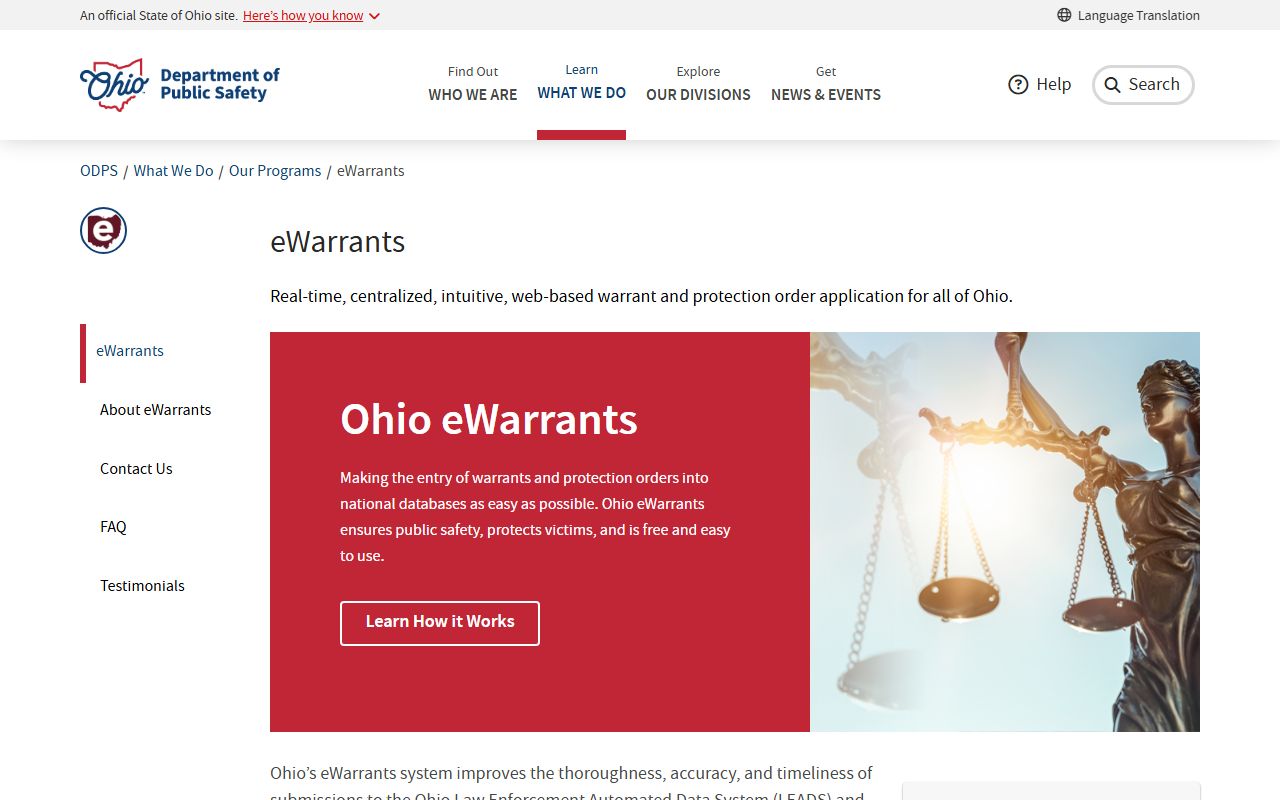
This electronic system lets agencies upload Ohio warrant records straight into LEADS and the FBI's NCIC database. Before eWarrants, many agencies used paper processes that were slow. The Governor's Warrant Task Force found that a large number of Ohio arrest warrants and protection orders were never entered into LEADS or NCIC at all. Meigs County Common Pleas Court went online first with the system. They cut bench warrant filing time from days to about 12 minutes. The eWarrants system is free for all Ohio courts and law enforcement, though its use is not mandated. You can reach the eWarrants team at 614-728-4004 or ohioewarrants@dps.ohio.gov.
The Ohio Department of Public Safety also runs LEADS, the state's main criminal justice data network.
LEADS stands for Law Enforcement Automated Data System. It connects to NCIC and the National Law Enforcement Telecommunications System. The Wanted Persons File in LEADS holds active warrant data from across Ohio. Under Ohio Administrative Code 4501:2-10-03, agencies must enter warrants that meet firearm prohibition criteria within 72 hours. Before the eWarrants push, Ohio had just 18,117 warrants in NCIC in March 2019. By June 2022, that number jumped to over 220,206.
Note: The eWarrants system does not let you check if you have an active warrant. Contact local law enforcement or the court for help with warrant checks in Ohio.
How to Search Ohio Warrants
There are a few ways to search for Ohio warrant records. Online access is limited for the general public because warrant data in LEADS and eWarrants is restricted to law enforcement. But county courts and sheriff offices offer other paths to find warrant information. Many Ohio counties have online case lookup tools through their clerk of courts websites. These show case details, charges, and sometimes warrant status.
To search in person, visit the clerk of courts or sheriff's office in the county where the warrant may have been issued. Bring a valid photo ID. You can ask the clerk to look up records by name or case number. The sheriff's office can tell you if there is an active warrant for a specific person in their county. Some Ohio sheriff offices publish active warrant lists on their websites, while others only share that information by phone or in person. Under ORC 149.43(B), public offices must prepare records for inspection promptly during regular hours. Copies must be made available at cost within a reasonable time.
The Ohio Supreme Court oversees the Ohio Courts Network, a centralized warehouse of case data used by courts and justice partners.
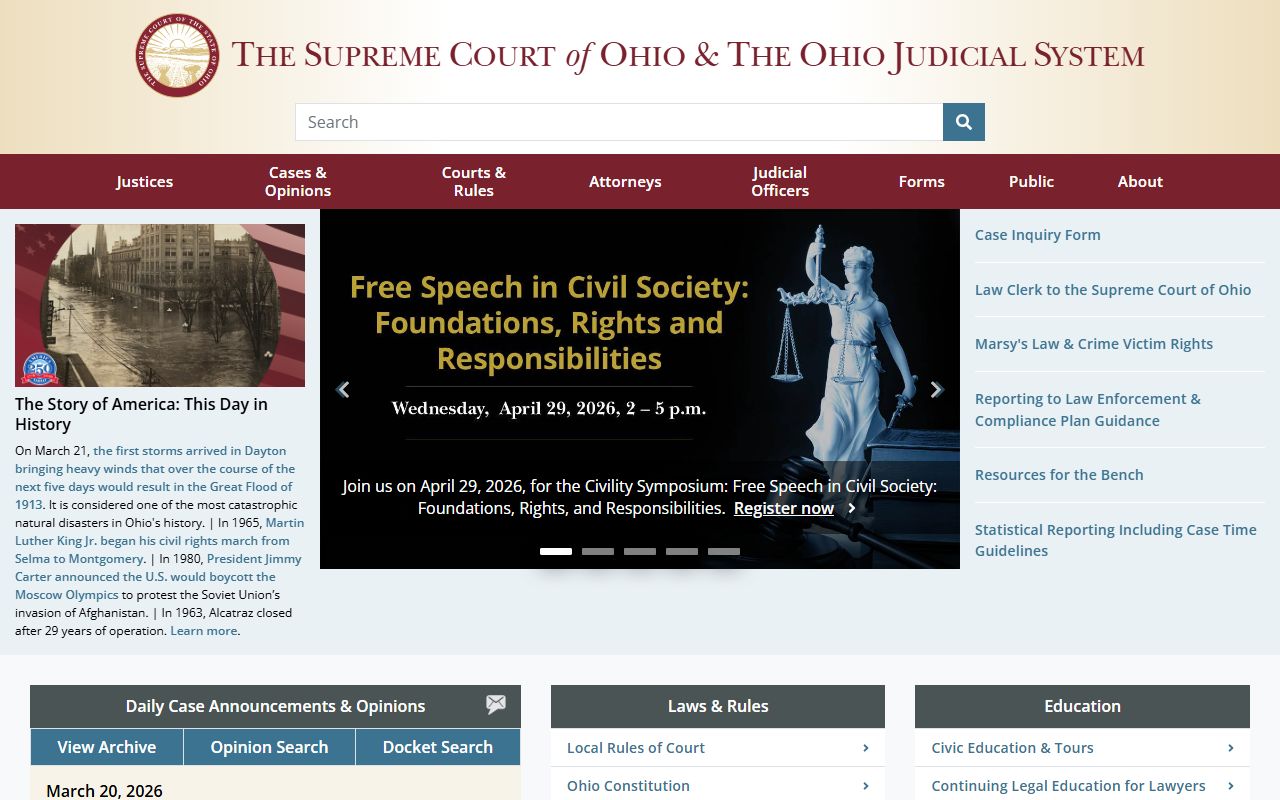
This system lets courts share criminal history reviews, warrant searches, and protection order information. Access is restricted to legal professionals and authorized users. For the public, searching Ohio warrant records means going through local courts and sheriff offices directly.
When you request Ohio warrant records, you may need:
- Full name of the person
- Date of birth if known
- Case number if you have one
- The county where the case was filed
Types of Ohio Warrants
Ohio courts issue several kinds of warrants. Each type has its own legal basis and purpose. Arrest warrants are the most common. A judge issues an arrest warrant when there is probable cause to believe someone committed a crime. Under ORC 2935.11, felony arrest warrants must follow a specific form. The warrant names the person, the offense, and the court that issued it. Officers must give the arrested person a copy of the warrant under ORC 2935.14.
Bench warrants come from a judge when someone fails to appear in court or violates a court order. These are common in Ohio. They show up in both criminal and civil cases. If you miss a hearing date, the judge can issue a bench warrant for your arrest right from the bench. Search warrants are different. Under ORC 2933.21, a court with jurisdiction can issue a search warrant when there is probable cause that evidence of a crime exists at a specific location. ORC 2933.22 sets the probable cause standard. ORC 2933.24 spells out what the warrant must contain. Search warrants in Ohio must be executed within 72 hours.
The Ohio State Highway Patrol administers LEADS and sets the standards for how warrants are entered into the statewide system.

Ohio uses pickup radius codes to control how far a warrant can be enforced. Code A means only the agency that entered the warrant picks up. Code L is local pickup. Code 5 covers the county. Code 4 adds adjacent counties. Code 3 covers Ohio within 100 miles for violent felonies. Code 2 is anywhere in Ohio. Code 1 is a nationwide warrant that needs the chief of police to authorize it. These codes help Ohio law enforcement decide which warrants to act on during routine stops or other contact.
Ohio Warrant Records and Public Access
Ohio has strong public records laws. ORC 149.43 says that records kept by any public office are open to the public unless a specific exemption applies. Warrant records generally fall under this rule. You do not need to give your name or state a reason for your request. The office cannot make you fill out a form just to look at public records. If an office denies your request, you can file a complaint with the court of claims or start a mandamus action. Statutory damages of $100 per business day, up to $1,000, can be awarded if the office wrongly withheld records.
Some warrant records in Ohio do have limits. Confidential law enforcement investigatory records are exempt. Sealed warrants stay sealed until a judge says otherwise. Records about uncharged suspects may be withheld. Juvenile warrant records carry extra protections under Ohio law. But the vast majority of Ohio warrant records from adult criminal cases are open to the public.
Governor DeWine formed the Warrant Task Force in February 2019 to address the backlog of unentered warrants across Ohio.

The Task Force found that agencies were using outdated paper processes. Many Ohio warrant records never made it into LEADS or NCIC. The result was the eWarrants system and a more than 1,000 percent increase in Ohio warrant entries in the national database between 2019 and 2022.
Ohio Warrant Search Resources
Several Ohio agencies maintain databases related to warrant records. The Ohio Department of Rehabilitation and Correction runs an offender search tool that shows current inmates, parole hearings, and supervision status.
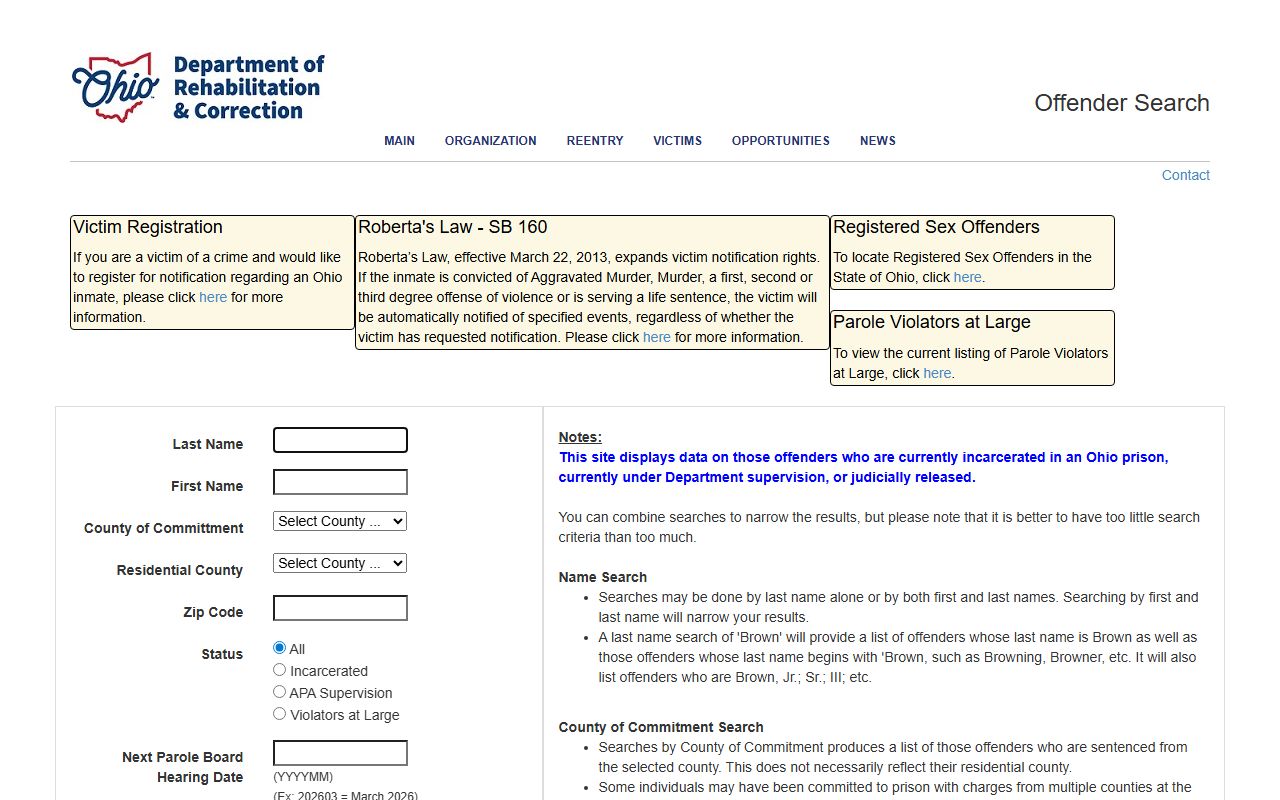
This database covers state prison inmates only. It does not show county jail inmates or people with outstanding Ohio warrants who have not been arrested. You can search by name, county, or offender ID. For county jail information, contact the local sheriff's office. The ODRC can be reached at 614-752-1159.
The Ohio Bureau of Criminal Investigation maintains the state's Computerized Criminal History database. BCI conducts checks at WebCheck locations across Ohio, including police departments, sheriff offices, and BMV locations. Fees run about $22 to $35 for a BCI check and $25 to $30 for an FBI check. Ohio warrant information may show up on these checks when warrants have been entered into the system. If you find errors in your record, BCI has a challenge process. Reach BCI at 877-224-0043 or by mail at PO Box 365, London, OH 43140.
The Ohio Attorney General's office runs the sex offender registry under ORC 2950.13. You can search by name, city, county, or zip code. The registry includes photos, conviction details, and address verification. The Ohio Rules of Criminal Procedure govern how warrants are issued, executed, and returned across the state. Rule 4 covers arrest warrants. Rule 41 covers search and seizure, including electronic warrant procedures.
Note: Ohio permits electronic warrant applications under Rule 41 of the Ohio Rules of Criminal Procedure, and electronic signatures are accepted for warrant documents.
Browse Ohio Warrant Records by County
Each of Ohio's 88 counties has its own court system and sheriff's office that handles warrant records. Pick a county below to find local contact info and resources for warrant records in that area.
Warrant Records in Ohio Cities
Ohio cities do not maintain their own warrant records. Warrants go through the county court system and sheriff's office. Pick a city below to find which county handles warrant records for that area.